
US credit card rates should be capped at 10% for one year. Lenders have until January 20th, 2026, to comply.
There is not very much more information about this, but the reasoning seems to be that fixing credit card rates at less than half of the current level will make credit cheaper and more available and get the economic wheels rolling faster.
That is not exactly how the banks see it. While they are for making credit available—that is, after all, their business—they are less enthusiastic about providing it at a fixed price. In fact, they say that capping the rates could make it infeasible to issue (as much) credit to people with lower credit ratings, thus making credit less available and more expensive for those who need it.
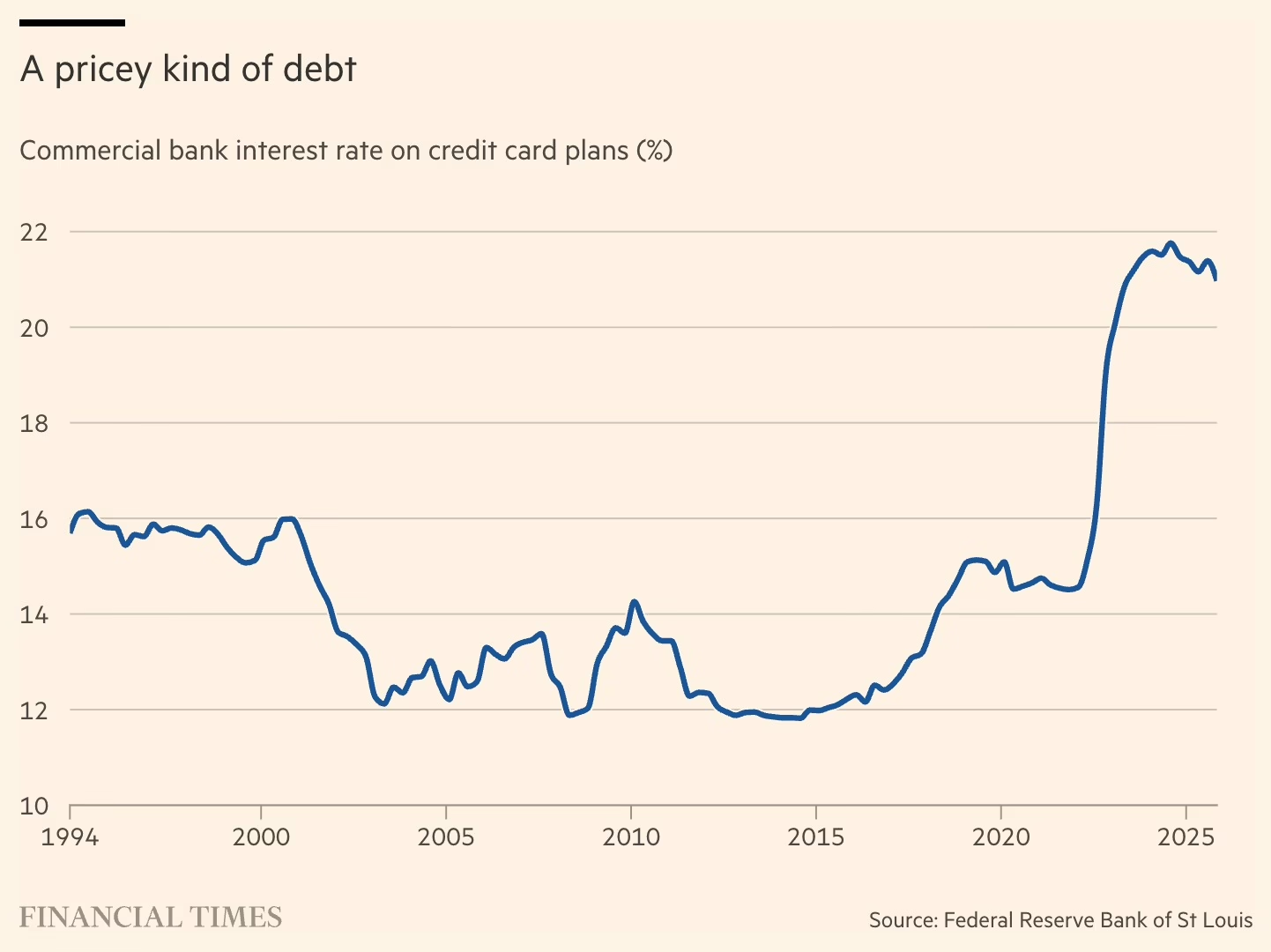
And there could be some merit to that argument. The Bank Policy Institute says that data from the Federal Reserve in 2019 indicates that a cap of 10% would limit access to credit for 14.3 million people and families (source: Bloomberg).
Compared to 2019, however, there are now other alternatives to credit cards than pawn shops and payday lenders, most notably the buy-now-pay-later (BNPL) option, which has already taken a bite of the credit card market. BNPL firms would conceivably not be included in the cap because their fee is not a quoted rate and is paid by the retailer/seller, not the consumer.
As with a lot of current events, it is unclear how this directive will play out in practice, if at all. It only took a few days, though, for the first issuer, Bilt, to launch three new credit cards all capped at a 10% rate per year (source: Bloomberg).
FRG and The Risk Report find credit card regulation interesting because credit cards are a significant part of business for the financial institutions we serve.
Regitze Ladekarl, FRM, is FRG’s Director of Company Intelligence. She has 25-plus years of experience where finance meets technology.
This article is part of the FRG Risk Report, published weekly on the FRG blog. To read other entries of the Risk Report, visit frgrisk.com/category/risk-report/.