

This week marks a year since the devastating fires in Los Angeles. A year is a long time for those in Altadena and Pacific Palisades who were displaced and still do not have a home to return to. Between physical clean-up, financial resolution, and the accompanying bureaucratic process, recovery has been slow. Many have chosen to leave the area altogether, in part because the housing costs are significantly higher than before the fires even after rebuilding gets underway.
And while Southern California is a particularly dire example, the US housing market in general is still suffering from a lack of supply that keeps prices high and adds to affordability woes. Or at least that is what economists think. Because of the government shutdown in October 2025, official inflation numbers were only sparsely updated, and key housing price metrics were imputed from as far back as April 2025, according to the Bureau of Labor Statistics. That effectively kept housing costs flat for more than half of the year (source: Bloomberg).
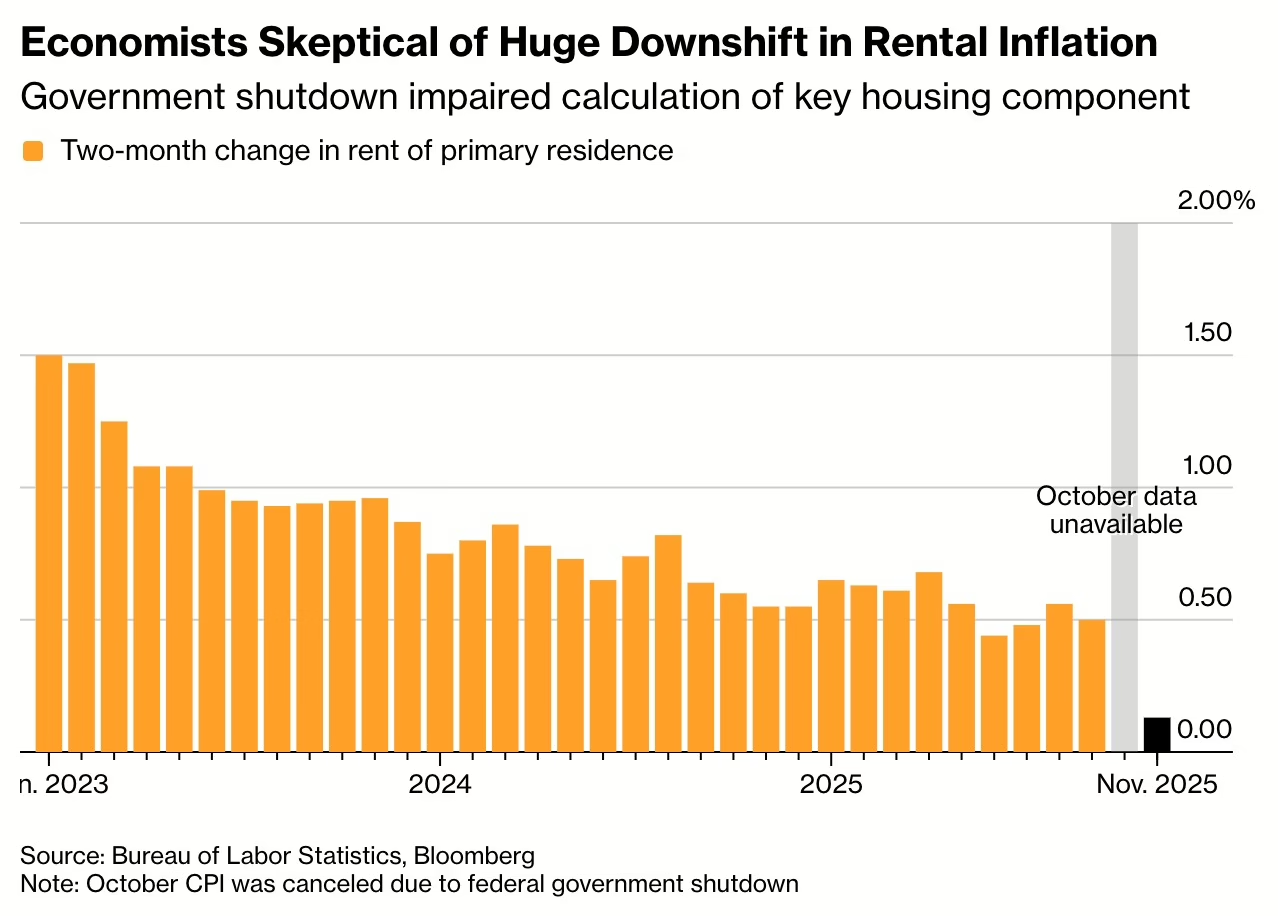
Statistics can only tell us so much, and right now, that is not a lot. Besides, how we feel at home is a big piece of our sense of self, and it is difficult to argue against that with numbers.
In other words, if we cannot pay the rent or mortgage, it doesn’t matter what the housing cost inflation has been or whether the figure is statistically sound.
And when asked about how people feel about the housing market, the response is "meh" to "not good." The housing affordability index is near the lowest level in 20 years (source: National Association of Realtors), the availability of mortgage credit is also not great (source: Mortgage Brokers Association), and neither home builders nor home buyers are confident (source: University of Michigan, National Association of Home Builders).
However, the feeling part all depends on the question and who you ask. In late 2025, there was a lot of buzz about a "K-shaped economy," meaning that those who have, now have more and are optimistic, and those who are struggling feel the opposite. And there is some validation for these feelings in the numbers. For example, in 2025, the wage growth of US high-earners surpassed that of low-earners (source: Federal Reserve Bank of Atlanta).
There is also merit to this in the housing market. The median age of a first-time homebuyer is now 40 years (up from 30 in 2008), and repeat-buyers are in their 60s (up from their 40s in 2008) (source: National Association of Realtors). Wealth tends to grow with age. Furthermore, only for those with a credit score of 760 or higher have mortgage originations returned to pre-Global Financial Crisis (2008) levels (source: Federal Reserve Bank of New York).
Thus, it seems some of us are feeling less at home.
FRG and The Risk Report find the housing FRG and The Risk Report find the housing market interesting because the economy greatly impacts the financial institutions we serve.
Regitze Ladekarl, FRM, is FRG’s Director of Company Intelligence. She has 25-plus years of experience where finance meets technology.
This article is part of the FRG Risk Report, published weekly on the FRG blog. To read other entries of the Risk Report, visit frgrisk.com/category/risk-report/.