
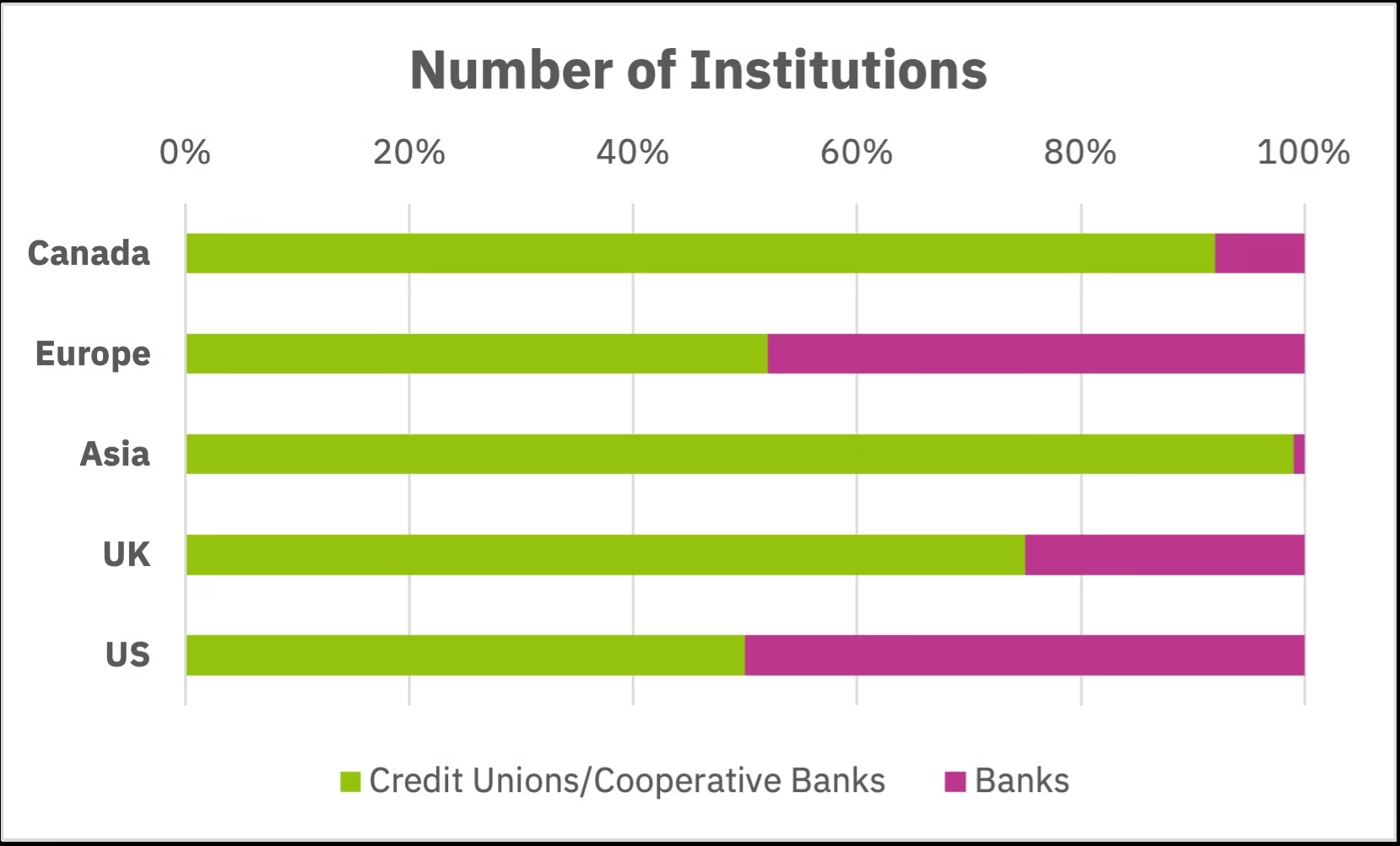
We are maxxing everything right now: looks, protein, TJs, tokens, baskets (go Knicks!), and goals (go Scotland!). Everything has to be bigger and better and more efficient, and that goes for banking as well. We tend to forget that across the globe, everyday financial life and credit are mostly driven by small credit unions and cooperative banks that serve their local communities.
Credit unions and cooperative banks differ from commercial banks in that they are member-owned, overwhelmingly not-for-profit, and specific to a demographic group or area. In that sense, they are more chill than banks because they are not necessarily looking to compete or grow bigger, but focus more on doing what they do really well in order to keep loan rates down and savings rates up.
That does not mean they do not have to worry about risk.
For one, they are typically less diversified than commercial banks and often focused on traditional retail credit such as mortgages, auto loans, consumer loans, and credit cards. That means that if (random example) inflation goes awry and borrowers start hurting economically, these entities cannot easily switch to another line of business.
This diversification risk is amplified by credit unions and cooperative banks often being tied to a geographic location or employer. Say that the area is hit by a hurricane, flood, fire, or a local factory closes down. Chances are, it hits a wider group rather than just a few borrowers. To manage the diversification risk, they really have to be good at assessing each application and setting the terms right.
Then there is the heightened liquidity risk. Because they are member-owned the same people are present at both the loan (asset) and deposit (liability) side of the balance sheet. In a crisis situation where assets are losing value, or being perceived as less valuable, the deposit flight can happen much faster than if borrowers and savers were not overlapping. That being said, credit union members are typically more loyal than regular bank customers, and thus less likely to leave at the first sign of trouble.
Lastly, there can be a technology risk. Because credit unions and cooperative banks are smaller than commercial banks, it is more difficult for them to get economies of scale from their technology. Put another way, often there is no cost-efficient technology platform available, and they have to resort to keeping data and risk processing spreadsheet-based, which is at best clunky and manual, at worst error-prone and unsafe.
If only there were someone (FRG) who could help them govern their data and set them up with an intelligent risk platform (VOR) perfectly scaled to their size, and they did not even have to manage or host it themselves.
Sources: Global financial regulators, NCUA, and FDIC