

June was scorchio, as they used to say on The Fast Show.
During the recent London Climate Action Week, an event on the topic of extreme heat had to be cancelled due to extreme heat. And with only a few days in between, we seem to be moving from one heat wave to the next. Even here in Denmark, where summers rarely make it out of the 70s, we had two days kissing 100°F late last month.
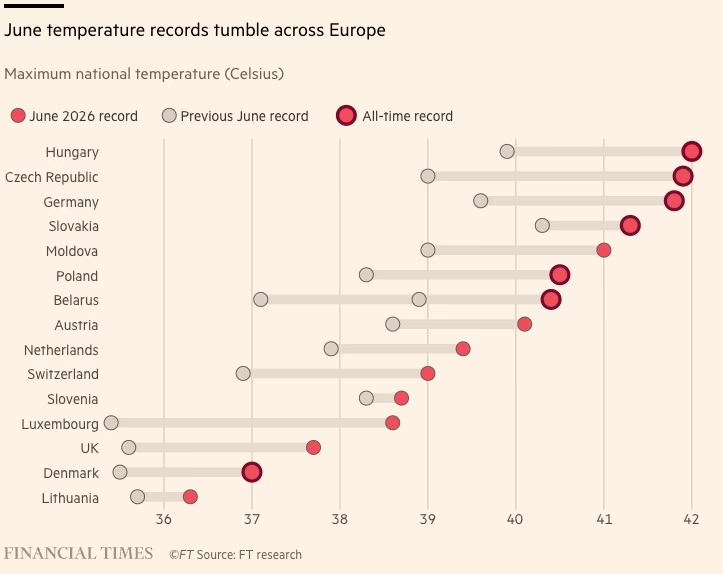
Not only are heat records being broken, but they are also breaking more often, which means that global warming seems to be accelerating. Regulators are starting to catch on to that.
Why Extreme Heat Risk Is Now a Regulatory Priority
The European Banking Authority (EBA) recently told Bloomberg that it is looking into measuring the impact of extreme heat, and maybe even include it as a category in the required stress testing alongside other physical risks.
However, the effect of rising temperatures on asset values is trickier to assess than, for example, that of flooding, not only because it is less localized but also because it is slower to show and therefore more difficult to separate.
In addition, the European Central Bank (ECB) is having another go at incorporating transition risk into its loan facility to banks. Transition risk is the risk that banks fail to transition their assets from issuers and borrowers with high carbon footprints to those with low or no carbon footprints.
ECB is assigning an uncertainty score to corporate bonds used as collateral, based on the bond issuer’s pollution level and plan for transition to net-zero. It will then use these scores to determine how much to deduct from collateral value to account for the risk. Bank of England has also announced it will be applying such haircuts.
These policy changes are more of a signal of how serious the central banks are about transition risk than of immediate practical implication, since European banks are currently not borrowing very much from the ECB and when they do, the use of corporate bonds as collateral is limited.
Signals are important, though. Europe is the fastest-warming continent, and preliminary numbers put the death toll from this latest heatwave around 20,000. And that is as we see the next one rolling in with wildfires and heavy storms in tow. Only about 20 percent of homes are air-conditioned, according to the International Energy Agency, and less than half of the European member states of the World Health Organization have a national heat health action plan in place (source: Financial Times).
Regitze Ladekarl, FRM, is FRG’s Director of Company Intelligence. She has 25-plus years of experience where finance meets technology.
This article is part of the FRG Risk Report, published weekly on the FRG blog. To read other entries of the Risk Report, visit frgrisk.com/category/risk-report/.