

I know, nobody likes a Desmond Downer*, but oil prices are on the rise again, and while that is not great, one can hope the spike is relatively short-lived, like the one in March-May. One will most likely be disappointed.
In the spring, a lot was done to dampen oil price hikes and swings. Specifically, many, many barrels of oil were released from the Strategic Petroleum Reserve (SPR) to cushion the supply shock, and China drastically cut its demand for imported oil and shifted to draw down its own reserves.
These measures helped carry the world over until oil prices started coming down.
Now, the price of Brent crude oil has hit $100 per barrel again, but what makes it riskier this time (not that it wasn’t dire and risky before) is that we have already done all the quick fixes to a temporary bind, and also the bind seems to no longer be just temporary.
The SPR is close to empty, the commercial reserves are already exhausted, and the US oil refineries that turn crude oil into something usable, such as gas, diesel, and jet fuel, are running over 95 per cent of capacity (source: Financial Times). And with China turning its oil flows inward, that is another supplier putting less on the world market.
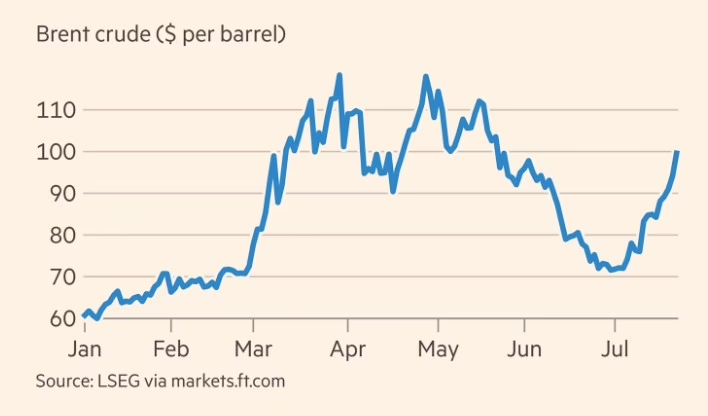
In other words, whatever could have put the brake on oil prices is not braking anymore. They might even be accelerating because there is no resolution in immediate sight.
The wider economic effects of that might amplify each other:
- More expensive oil causes higher inflation, because fuel costs are included in price indices and because everything else in those indices—groceries, housing, and transport—also relies on fuel and therefore gets more expensive.
- Keeping inflation and economic growth stabilised is what almost all central banks are tasked with, and they usually raise interest rates to lower inflation. That is a little bit trickier if economic growth is low, as it is in Europe, or K-shaped, as it is stateside, meaning real wages are eroding while stock prices are rising. Higher interest rates can potentially slow down growth even further (stagflation) and hurt both the “prongs” of the K.
- Interest rates have already gone up because the financial markets rearrange themselves around the expectation that central banks will raise rates, and therefore there has been a global bond sell-off. On July 23rd, the US Treasury yields rose to their highest level in 18 months (source: Financial Times)
- And let’s not forget there is a physical side to an oil supply shock. There will be goods that are not transported, food and other crops that are not grown, houses that go unbuilt or unheated, and jobs that are lost.
It takes time to adapt to that, especially when we are already running on empty.
*Apologies to all Desmonds, down or not.
Regitze Ladekarl, FRM, is FRG’s Director of Company Intelligence. She has 25-plus years of experience where finance meets technology.
This article is part of the FRG Risk Report, published weekly on the FRG blog. To read other entries of the Risk Report, visit frgrisk.com/category/risk-report/.